
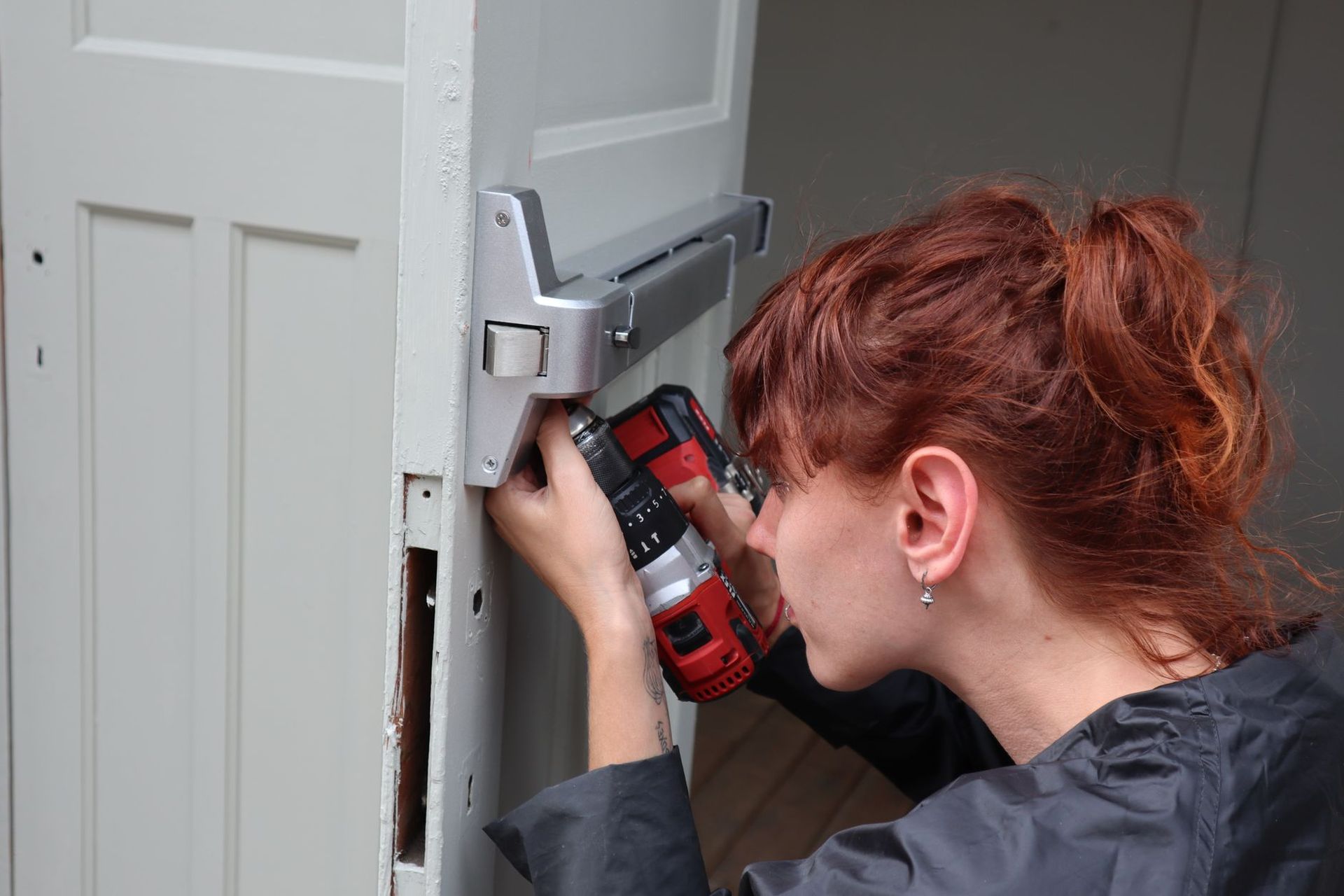
In Timonium, Towson and across Baltimore County, doors often change with the seasons. Humid summers swell wood, and dry winters shrink it. That movement is normal, but it shows up as a door that binds or scrapes. Here is what to look for and what to check before you call for help.
Start With the Simple Checks
Before you touch the door, watch how it moves. Open and close it slowly. Note where it rubs. Is the rub at the top corner, the latch side or the bottom? Look at the gap around the door. A gap that is tight on one side and wide on the other points to a hinge or frame issue. An even gap that is tight all around points more toward swelling.
Check whether the rub changes with the weather. A door that sticks only in humid months is often reacting to moisture. A door that sticks all year may have a mechanical problem, such as a loose hinge or a shifted frame.
Loose Hinges and Screws
Hinges are a common cause of a sagging door. Over time, the screws loosen in the wood. The door drops slightly, and the latch side rubs the frame. Check each hinge. If a screw spins without tightening, the hole is stripped. A longer screw that reaches the framing behind the jamb, or a wood plug and new pilot hole, may hold better.
Look at the hinge leaves, too. A bent hinge pin or a leaf that sits out of line can pull the door out of square. Tighten the screws first. If the door still sags after that, the frame may need more support.
Strike Plate and Latch Alignment
The strike plate is the metal plate on the frame that the latch slides into. If it sits too high, too low or too far in or out, the latch will rub or fail to catch. Close the door slowly and look at where the latch hits the plate. Marks on the plate or on the frame show the issue.
Often a small adjustment fixes it. Loosen the strike plate screws, move the plate a little, and test the door. Some doors need a deeper pocket or a new plate with a larger opening. Take your time. Small moves are easier to undo than large ones.
Humidity Swell and When Planing Helps
Wood doors absorb moisture. In humid weather, the edges can swell enough to rub the frame. Painted or sealed doors can swell too, especially along the top or latch edge. The fix may be a light sanding or planing along the edge. Remove only what you need, and seal the raw wood right away so it does not absorb more moisture.
Planing is not always the right answer. If the door rubs only during humid months, a little relief along the edge may be enough. If the rub is in the same spot all year, check the hinges and frame first. Taking off too much wood can leave a gap that lets drafts and noise in.
When Shimming Makes Sense
If the frame has shifted, the door may need shims behind the hinges to bring it back into line. This is common in older homes where the house has settled over time. Shims placed behind the hinge leaves can move the door a small amount without removing wood. Work slowly and check the gap after each change.
What to Check Before You Call
- Where the door rubs: top, latch side, bottom or hinge side.
- Whether the sticking changes with the seasons.
- Whether any hinge screws are loose or stripped.
- Where the latch hits the strike plate.
- Whether the gap around the door is even all the way around.
Having these notes ready helps. It lets the person who visits understand the problem and plan the right fix.
Know When Another Trade Is Needed
Most door problems are simple repairs. Some issues fall outside basic home repair. A frame that is badly rotted, a wall that has moved, or water damage around the opening may need a different trade. We say so up front. Honest answers about limits help you avoid paying for work that will not solve the problem.
Keep an eye on the area around the door too. Drywall cracks near the frame, paint that peels around the trim, or a door that started sticking after a leak can point to a larger issue. Check these signs before you assume the door alone is the cause.
Doors, Windows and Home Repair
Doors work closely with the frame and the windows around them. Our window and door service covers install, repair, weatherstripping, locks and screens. For smaller fixes around the home, such as drywall, trim, caulk and hardware, see our home repair services.
Questions to Ask a Handyman
- Will you check the hinges, frame and strike plate before planing the door?
- Will you tell me up front if the job needs another trade?
- What should I check myself after the repair?
- Will you clean up the area when the work is done?
MDR Home Plus is a locally owned handyman service based in Lutherville-Timonium, MD. We serve Towson, Cockeysville, Hunt Valley, Pikesville, Owings Mills and the rest of Baltimore County. We are open Monday to Friday, 9:00 AM to 4:00 PM. To ask for an estimate, call (443) 983-0782 or use the form on our website. We usually reply within 1-2 business days, and we agree on scope, materials and timing before work starts.
Frequently Asked Questions
Why does my door stick only in summer?
Humid weather makes wood swell, especially along the edges. A door that sticks only in humid months is often reacting to moisture rather than a mechanical problem.
Should I plane the door right away?
Check the hinges, strike plate and frame first. Planing can help humidity swell, but taking off too much wood can leave a gap that lets drafts in.
What if a loose hinge screw keeps spinning?
The screw hole is likely stripped. A longer screw that reaches the framing behind the jamb, or a wood plug and new pilot hole, may hold better.